★★★★★
For the past two years, I have been choosing this company for snow removal services. Their work is excellent. The team arrived on time and completed t…
Read on Google — review by Harsh Vijay
Retail lots, office parks, medical buildings and multi-unit sites cleared around your opening hours — with a written response window, fire lanes and accessible routes in scope, and a time-stamped log of every visit.
The short version: on a commercial property the product is not the plowing — it is the documentation. Anyone can clear a lot. What protects the business is a written response window, salt applied to spec, and a record you can produce when a claim arrives months later.
A homeowner who wakes to an uncleared driveway is inconvenienced. A retail lot that opens uncleared is losing revenue by the hour, an office park with icy walks is generating injury claims, and a blocked fire lane is a code violation with your business name on it.
That difference changes everything about how the work is scoped. Residential snow service is judged on whether the driveway is clear. Commercial service is judged on whether the property was demonstrably maintained — which is a different standard, and it is the one that matters when something goes wrong. If you also need a home cleared, that is residential snow removal.
Slip-and-fall claims are the defining winter risk for any Buffalo business open to the public. When one is raised — sometimes months after the storm — the question is simple: can you show the property was reasonably maintained that morning?
Recollection is not evidence. A time-stamped record of when the lot was cleared, when salt went down and what the conditions were is what turns a disputed claim into a documented one. That is why every commercial visit is logged, and why the logs are yours to produce.
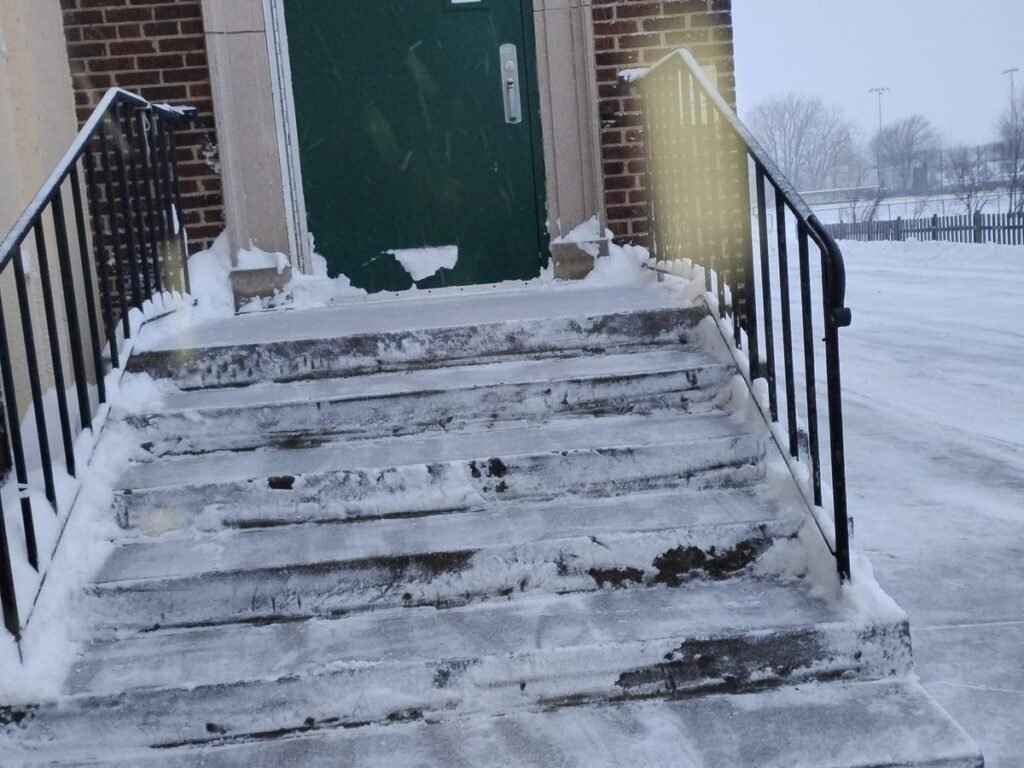
If members of the public reach your door, the accessible parking spaces, the striped access aisle beside them, the curb ramp and the path to the entrance all have to be cleared — not plowed around. The access aisle is the most common failure on a Buffalo property, because it is the emptiest space on a filling lot and the most inviting place to put snow. We cover it in detail in ADA snow removal.
| Property | The non-negotiable | What we plan for |
|---|---|---|
| Retail & storefronts | Open on time, entrances glaze-free | Pre-opening routes; pile placement kept clear of exit sight lines |
| Office parks | Accessible routes and the walk network | Staged clearing around arrival times; hand work at every entrance |
| Medical & clinics | Accessible parking and ramps, all day | Return visits through the day, not one morning pass |
| Multi-unit residential | Resident access and emergency egress | Drive lanes, visitor parking, bin access and fire lanes |
| Industrial & warehouse | Loading docks and truck movement | Wide turning room maintained; snow moved off manoeuvring areas |
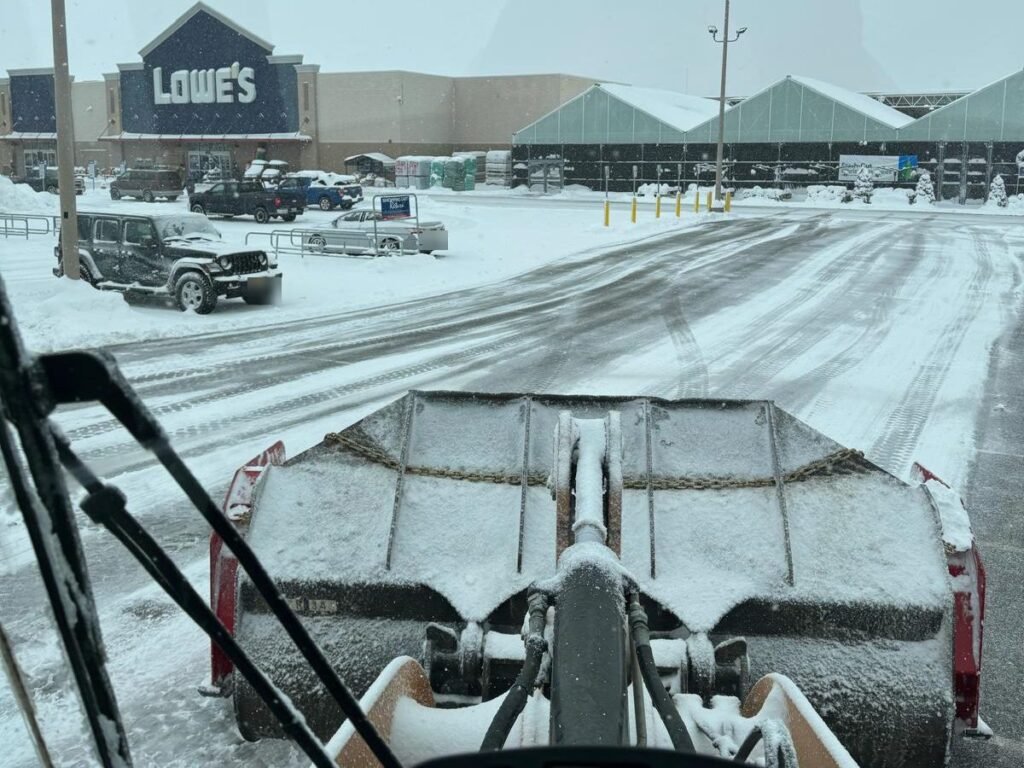
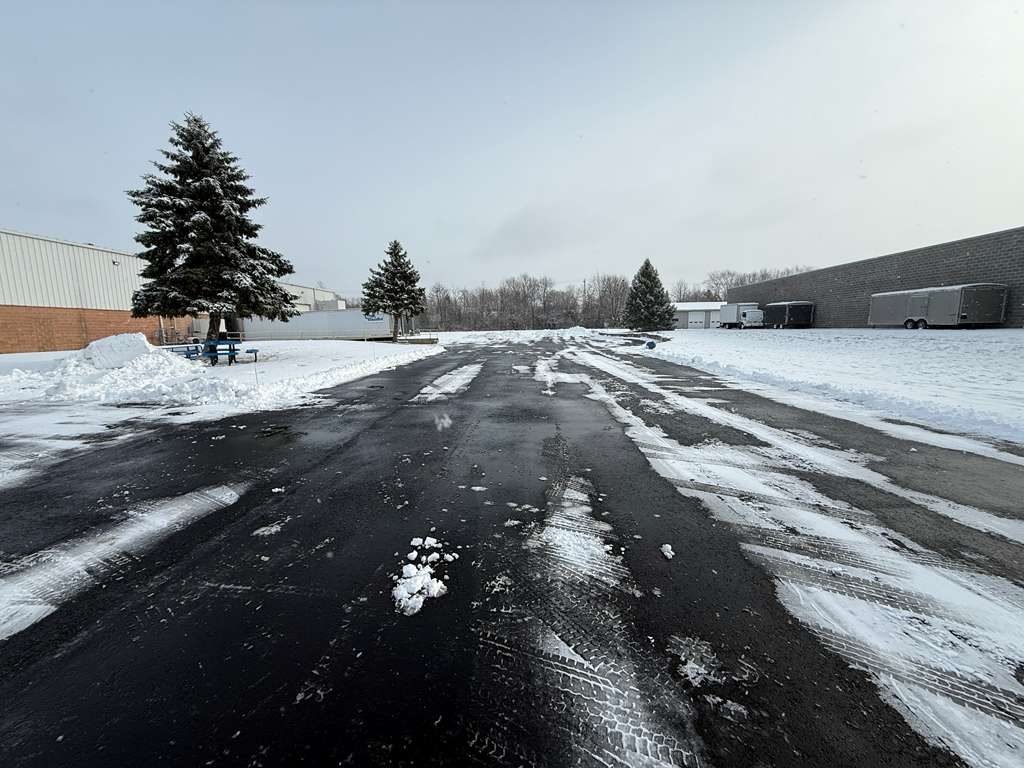
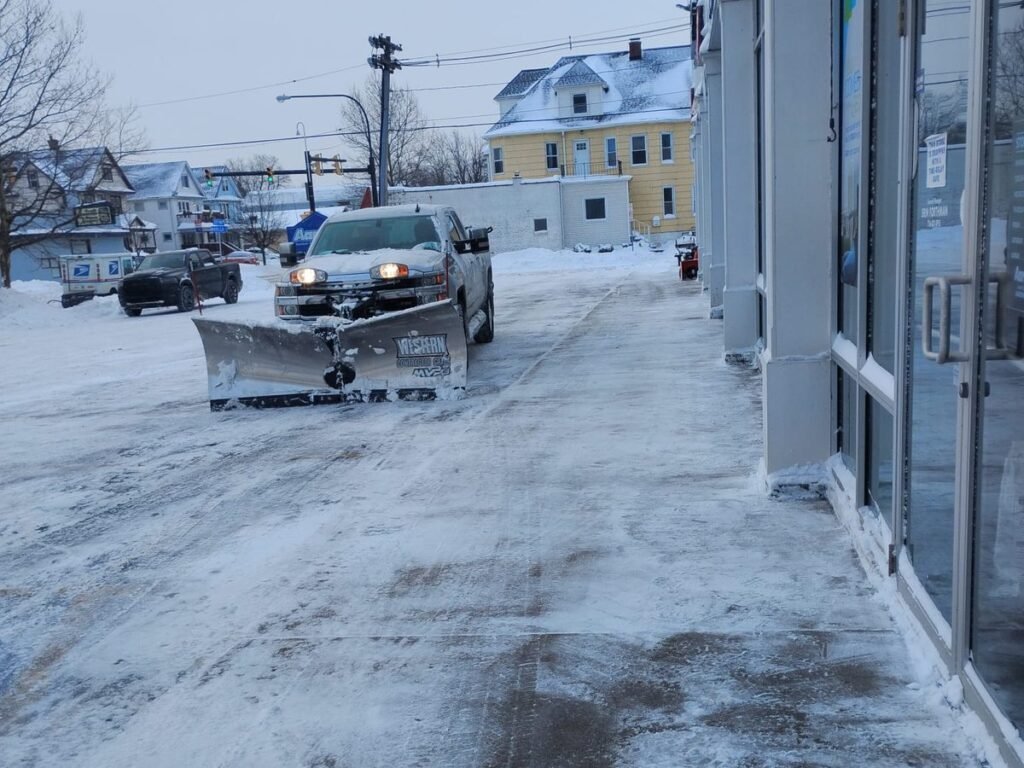
Photos from commercial sites we clear
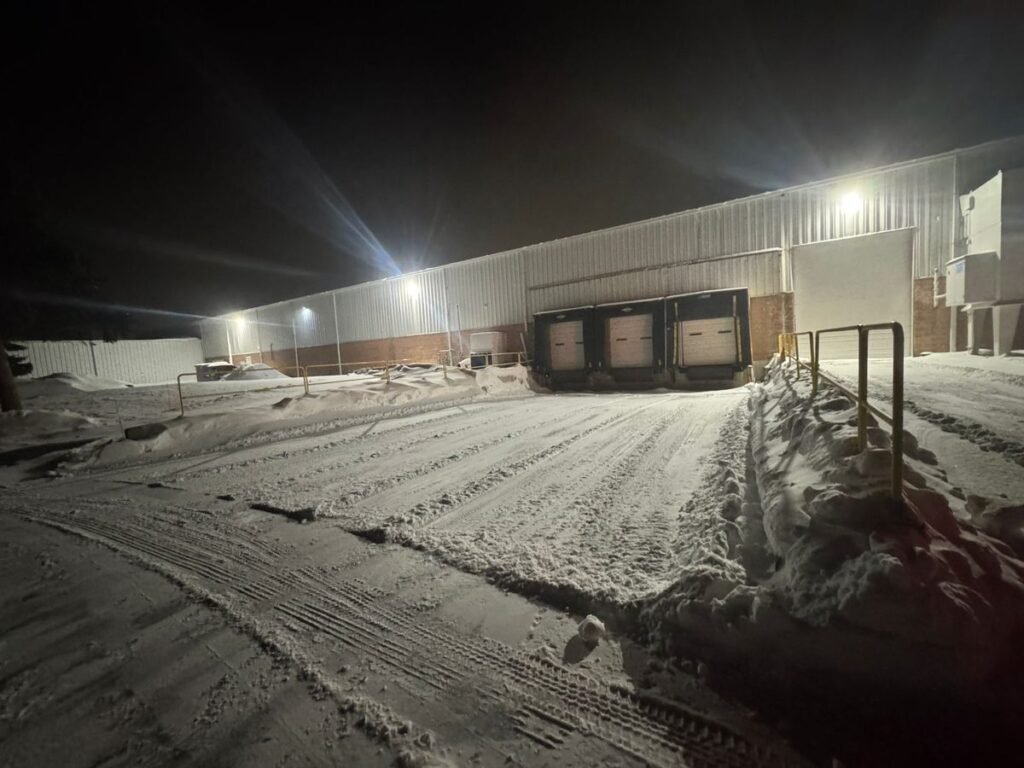
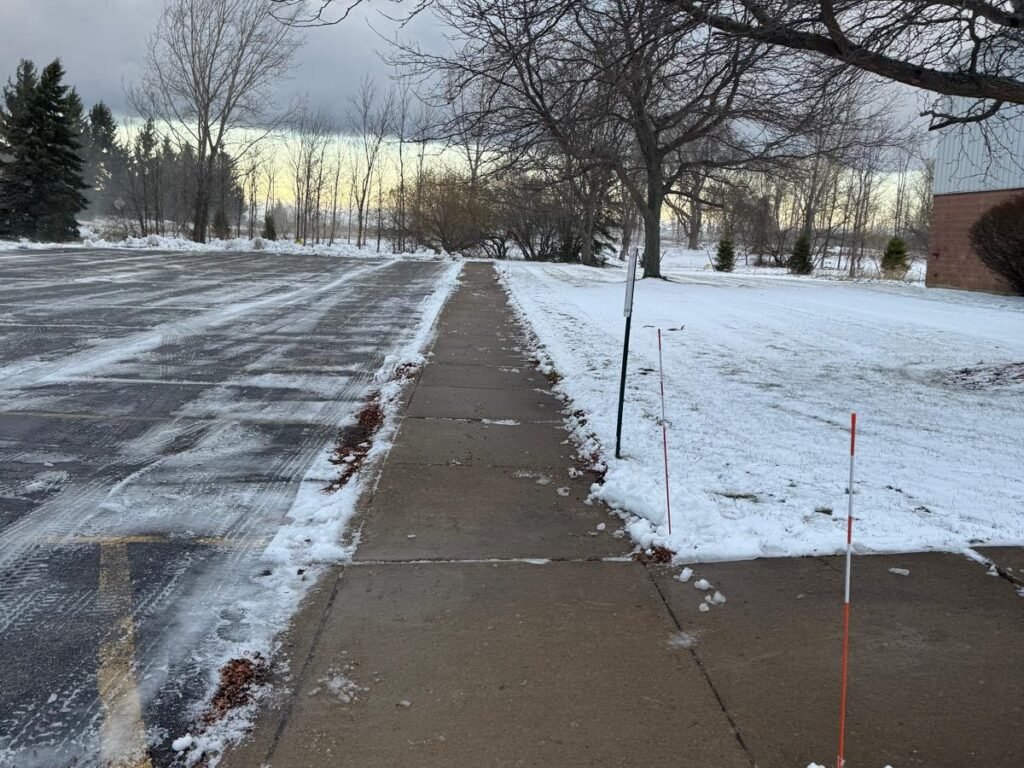
Buffalo commercial work is priced in three structures: per push (roughly $120–$250+ per visit for a commercial lot, $75–$200 for a medium lot), seasonal contracts with a service level attached, and monthly retainers for properties that want a fixed winter budget. Salting and hauling are usually separate lines rather than bundled.
Which structure suits you depends on how much variance the business can absorb. A seasonal contract moves the risk of a heavy winter to the contractor; per-push keeps it with you. The full market breakdown, with sources, is in the 2026–27 Buffalo snow removal cost guide.
Some property managers try to buy snow removal the way they buy plumbing: call when there is a problem. In a city averaging roughly 95 inches a season, that fails for three reasons.
During a lake-effect event every contractor is already working a full route. The properties that get cleared are the ones with contracts.
On-call means whenever someone is free. That is not a standard you can point to after an incident.
Ad-hoc visits leave no record. The evidence that protects you in a claim is exactly what on-call service does not produce.
Parking lot plowing is a volume problem rather than a driveway problem, which is why lots are cleared with loaders and box pushers as well as plow trucks. The work is scoped around your opening time and names every surface: the lot itself, drive lanes, loading docks, fire lanes, sidewalks, entrances and accessible routes, including the striped access aisle beside accessible spaces, which is cleared rather than plowed around.
Our default trigger is two inches, with 24/7 storm dispatch, and the trigger is written into the contract. Every visit is time-stamped, so you can show when the lot was cleared and when salt went down. How the service works across Erie County is on our snow plowing and removal page, and how lots are priced is in the Buffalo snow removal cost guide.
Snow hauling means relocating snow on site or trucking it off the property entirely. By late January the question at every commercial property stops being “is the lot clear?” and becomes “where has all of it gone?” Piles eat parking spaces — each one a customer who drives past — and pile height at exits blocks the sight lines drivers need to pull out safely.
Meltwater is the other half of it. A pile placed uphill of an entrance drains across the route on a mild afternoon and refreezes overnight, which is how a cleared property produces a fall. Storage is planned before the season, and the point at which snow gets relocated or trucked off site is agreed in the contract rather than negotiated in a January panic.
Commercial lots typically run $120–$250+ per push and medium lots $75–$200, with seasonal contracts and monthly retainers both common. Salt and hauling are usually separate lines. Full market breakdown in our Buffalo snow removal cost guide.
October. Commercial routes in Western New York are finalised before the first plowable storm, and mid-season sign-ups get whatever capacity is left — if any.
Time-stamped visit logs recording when the property was cleared and when salt was applied. They are the evidence that a slip-and-fall claim meets a maintained property rather than an unprotected one.
Yes — both are scope items in our commercial contracts, kept clear through the season, including the late-winter weeks when pile space runs out and hauling comes into play.
Buffalo and twenty towns across Erie County, with 24/7 storm dispatch. The full coverage list is on our snow plowing and removal page.
That is what dispatch and a written response window exist for. A single visit does not resolve a band that sits over the property for thirty hours — what matters is how often the route returns, which is agreed in the contract. We explain the weather itself in lake-effect snow in Buffalo.
Get the contract that protects the business, not just the pavement. Response window in writing, salt to spec, fire lanes and accessible routes in scope, and every visit logged. We survey the property on site before quoting — the survey and the estimate are both free.