★★★★★
For the past two years, I have been choosing this company for snow removal services. Their work is excellent. The team arrived on time and completed t…
Read on Google — review by Harsh Vijay
Home>Snow Plowing & Removal

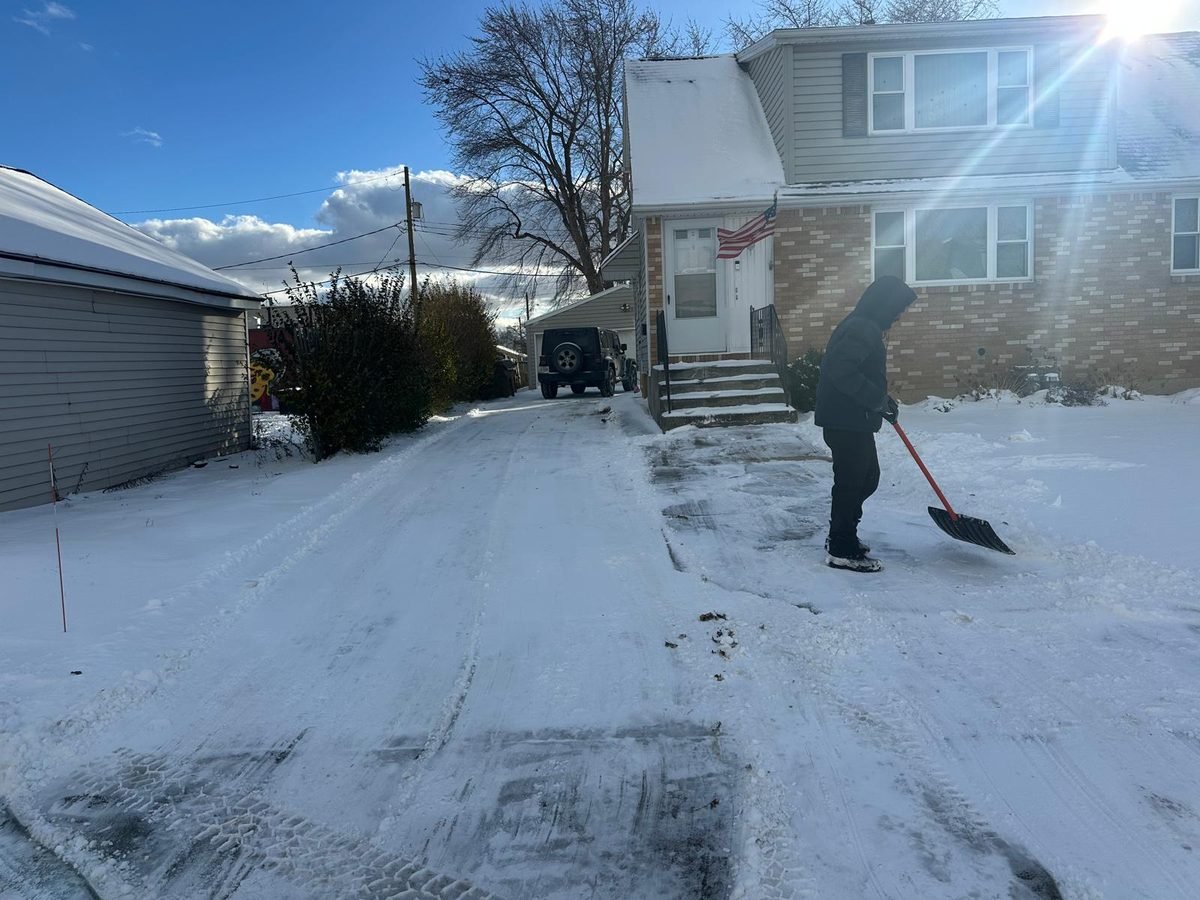
Redefine your winter
Buffalo winters do not arrive gently. A driveway cleared at dinner can be buried again by breakfast, and the ridge left behind by the city plow is frozen solid by the time you reach for a shovel.
Our crews are built around exactly that. We monitor every system crossing the region and dispatch as soon as your property hits its trigger depth — you never have to call us. We finish drives, walks and lots before the morning commute, and we run repeat passes through the long lake-effect bands rather than one late visit at the end.
We walk and stake every site before the first freeze, so bed edges, hydrants and irrigation heads stay marked all season. Come spring, your turf and pavers look the way they did in October.
What we clear
We handle the whole property with one crew — pavement, paths and everything in between.
We run truck-mounted blades on driveways and lots, from light flurries to storms that shut the region down, and clear edge to edge — never just a lane through the middle.
For deep, drifted snow and tight properties with nowhere left to stack, we bring blowers that throw snow well clear of the pavement instead of banking it along the edge.
Our crews hand clear entrances, porches, steps and accessible routes — the surfaces a machine should never touch, and where most falls actually happen.
We apply salt and brine at measured rates that break the bond between ice and pavement without burning turf, staining pavers or pitting fresh concrete.
When piles start eating parking spaces or blocking sight lines, we relocate the snow on site or truck it off the property entirely.
We clear retail, office and multi-unit sites around your opening hours, including loading docks, fire lanes and emergency exits.
How we work
Our team walks the site before the first freeze, measuring the drive, paths and steps, checking surfaces and slope, and identifying where cleared snow can safely go.
We recommend the trigger depth, list every surface our crews will clear and price the full season up front, then walk you through it before anything is signed.
We mark bed edges, hydrants and irrigation heads while the ground is still soft, then add your property to the crew route nearest you.
Our crews roll out automatically at trigger depth, clear and salt the property, and log every visit with a time stamp for your records.
By the time the city plows leave your street, we have already finished your driveway — that is the whole job.
Who we serve
A two-car driveway and a fifty-space lot need different equipment and different timing. We are set up for both.
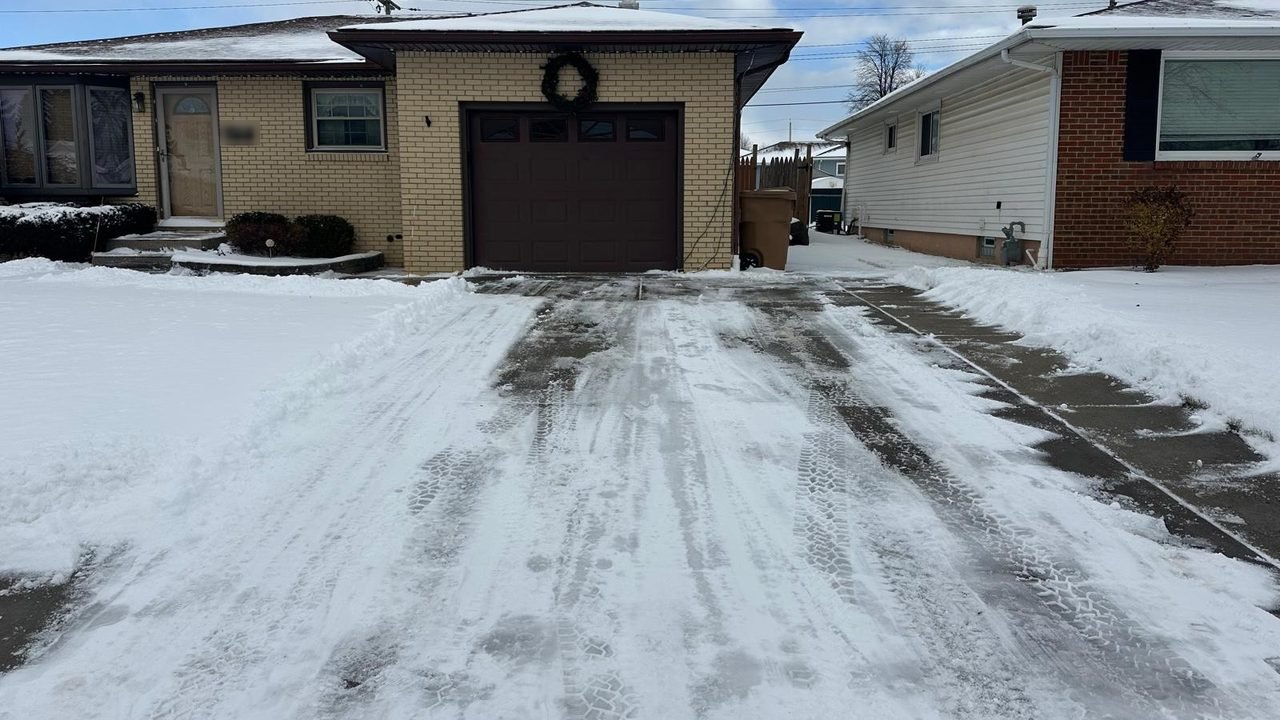
We run compact machines that clear tight drives and walkways without tearing up turf edges, on a schedule that has you out of the garage on time.
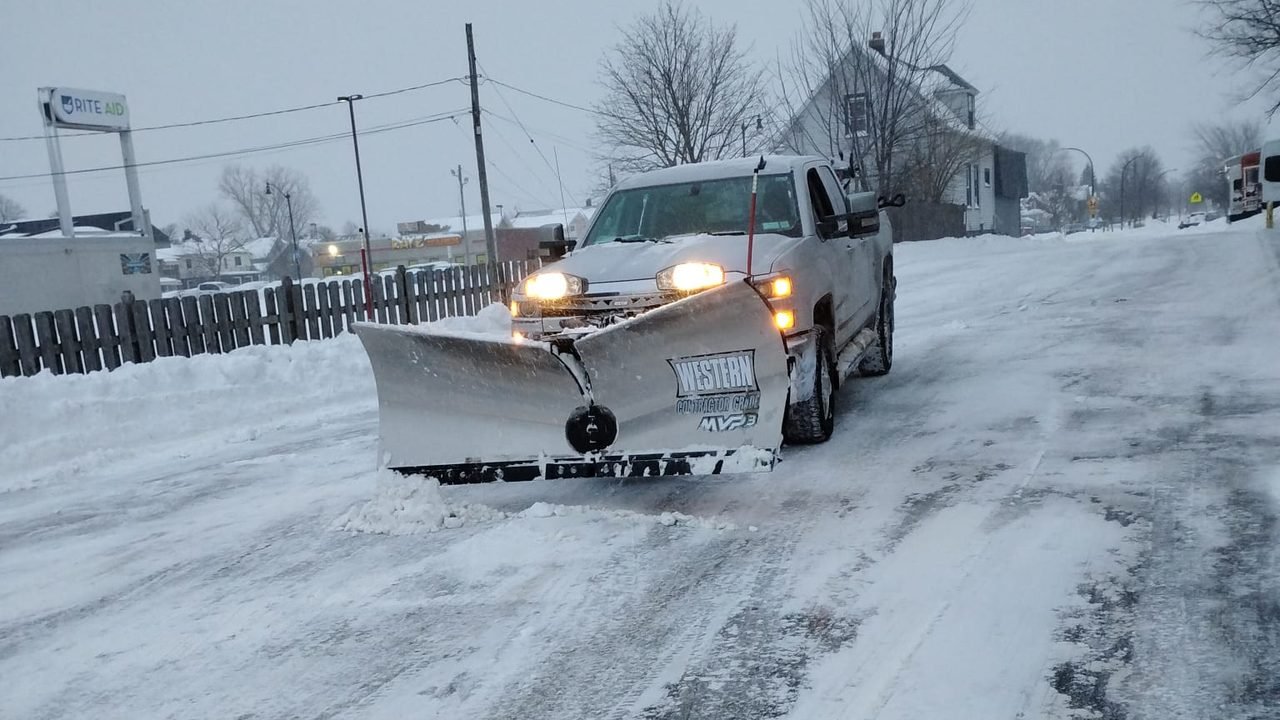
We bring trucks, loaders and bulk de-icing, scheduled around your opening hours, and we document every visit so you hold a service record if a claim is ever raised.
On the route
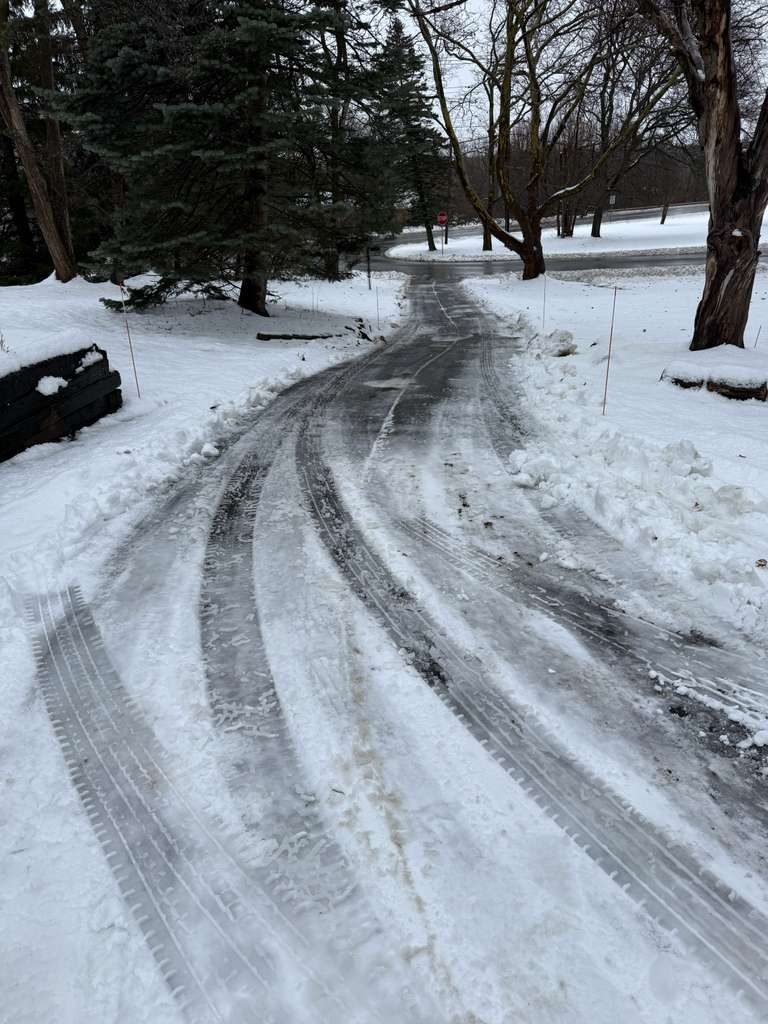
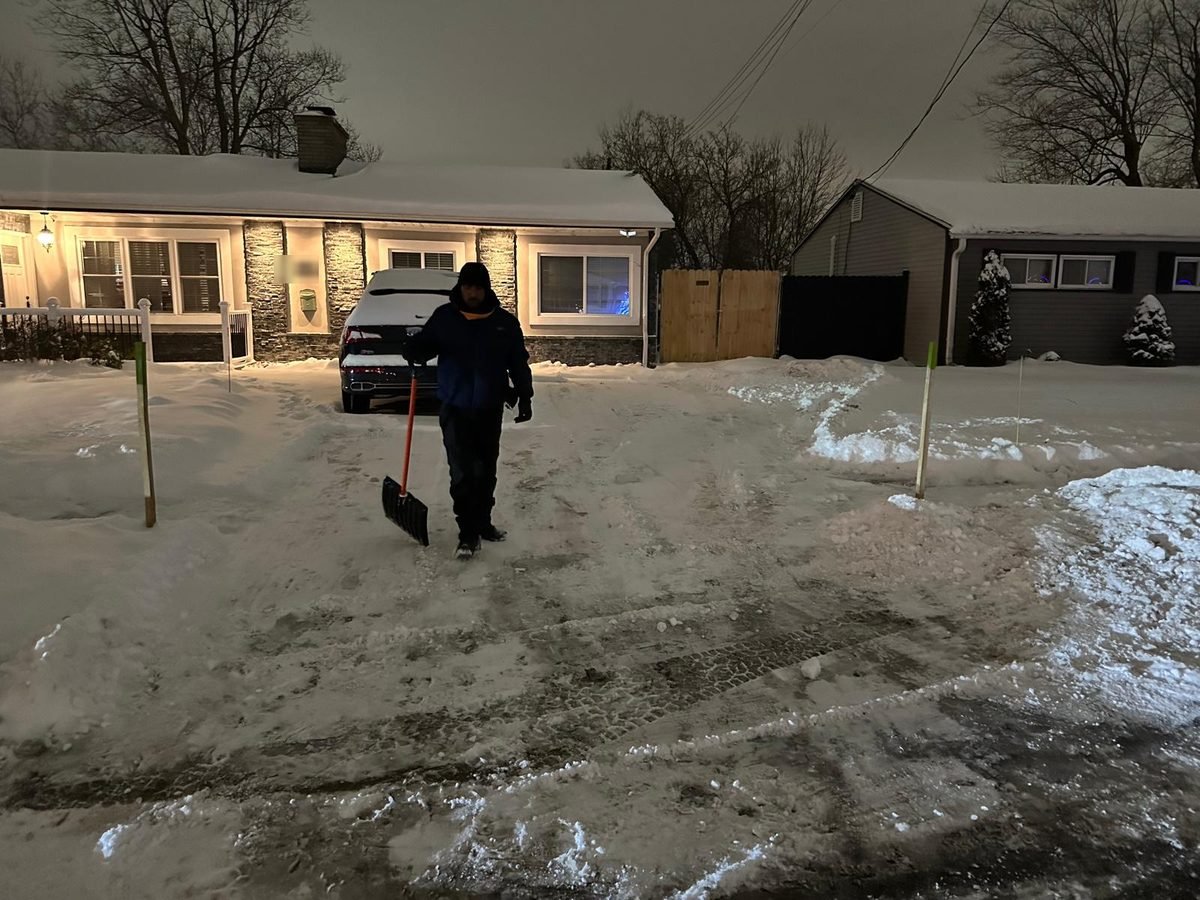
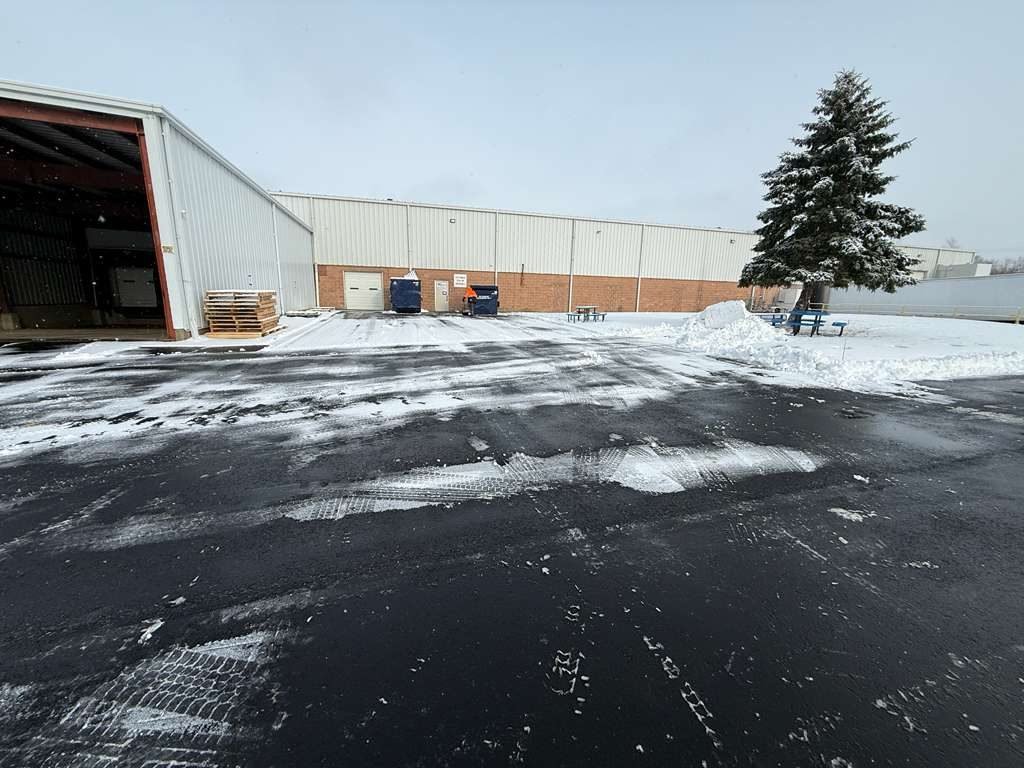
Driveways, lots and walkways our crews cleared through some of the heaviest lake-effect weather in the country.


Equipment
A plow that clears a fifty-space lot in twenty minutes will wreck a narrow residential driveway, and a machine sized for that driveway will still be working the lot at noon. Most complaints about a plow service trace back to the wrong equipment being sent, so we match the machine to the property before the season rather than during a storm.
The workhorse of residential snow plowing. Fast on a driveway, able to carry the end-of-driveway ridge away from your apron rather than packing it against the garage, and compact enough to work without tearing turf edges.
Commercial lots are a volume problem, not a driveway problem. Loaders and pushers move snow in bulk and stack it where it will not block sightlines, consume accessible spaces or melt back across the pavement and refreeze overnight.
No snow plow should ever touch a front step. Walkways, porches, steps and accessible routes are cleared by machine and by hand, then treated with de-icing material timed ahead of the freeze rather than after ice has already bonded.
Service area
We run snow routes in Buffalo, New York and nineteen surrounding towns. That geography matters more here than almost anywhere else: lake-effect arrives in narrow bands, so a Southtowns property can take three feet from a storm that leaves a Northtowns property with three inches. Routes are built around where the snow actually lands, which is why we survey your address before quoting rather than pricing the county at one flat rate. If you want the detail, we explain it in lake-effect snow in Buffalo, explained.
Not on the list? Call (716) 899-5995 and we will tell you honestly whether we can cover you properly, rather than stretching a route we cannot service in a storm.
Local rules & resources
Clearing snow after a storm is split between the city, the county, the towns and the state — and the part that lands on you is the driveway, the apron and the sidewalk. This is how it works locally, with the official sources.
Erie County has more than 4,625 miles of road, and most belong to the cities, towns, villages or New York State rather than the county. Erie County Public Works maintains no roads at all inside the City of Buffalo. None of them clear private driveways.
In the City of Buffalo, residential property owners are responsible for the public sidewalk next to their home, and commercial owners for their lots, driveways and adjoining sidewalks. Shoveling snow into the street is a City Code violation, so cleared snow has to stay on the property.
The City of Buffalo’s winter snow plan aims for at least one plow pass on every street within 24 hours of a snow event, and the trucks are GPS-tracked on the city’s snowplow tracker. That pass is also what leaves the packed ridge across your apron.
Erie County uses two levels. Under a travel advisory, travel only if it is necessary or an emergency. A travel ban is a temporary law banning driving because roads are too dangerous, which gives snow removal workers space to clear them. Erie County explains both.
Winter parking rules exist so plows can get through. The Town of Amherst bans street parking from 1:00 to 7:00 a.m., November 1 to April 1, and the City of Buffalo’s winter parking changes typically start November 15. Check your own town before the first storm.
Lake-effect snow off Lake Erie falls in narrow bands that can drop 2 to 3 inches an hour while the sun shines a mile or two away, according to the National Weather Service. Its Buffalo office issues the local warnings, and 511NY shows live road conditions.
When to hand it over
Most people do not call a snow contractor after a bad storm. They call after a bad season — and by then the routes are full. These are the situations where hiring it out stops being a luxury.
If clearing it is why you set an alarm an hour earlier from December to March, you are already paying for snow removal — in time rather than money. And a week away leaves accumulation that compacts into something no shovel will shift.
Shovelling is heavy exertion in cold air, and it is the classic winter cardiac risk. If the person who normally clears the drive has any reason to avoid that kind of strain, that is the whole argument.
Length multiplies every storm, and a slope that is manageable in November turns genuinely dangerous once it is packed and refrozen. Both are cases where equipment beats effort.
A near miss on the front steps is information. Entrances, porches and steps are where most winter falls actually happen, and they are the surfaces a plow never touches — they need clearing by hand.
If customers, tenants, patients or delivery drivers cross your property, snow stops being a convenience question and becomes a liability one. Commercial sites need documented clearing, not best efforts.
The honest test of a snow service is not the easy storm, it is the lake-effect week when every route is under pressure. If you were waiting until afternoon last season, that is a capacity problem and it will repeat.
City of Buffalo
Clearing a driveway in the city is a different job from clearing one in the suburbs. Lots are smaller, there is less room to put the snow, cars line the street, and the municipal plow leaves a compacted ridge across every apron it passes. What follows is what the work actually involves in each part of the city.
North Buffalo sits on a tight grid, with driveways that often run back to an alley. The approach matters more than the machine here — a plow that cannot reach the back of the lot leaves you with the half you actually park on.
Compact lots and closely spaced houses mean South Buffalo has very little room to put snow after the first serious storm. This is where relocating or hauling it stops being optional by February.
Street-parking pressure across the Elmwood Village leaves crews working a narrow window between parked cars, and most drives are single-width with no margin for error. Smaller equipment and staked edges do more good here than horsepower.
Allentown is a historic district of tight lots, shared drives and properties with no driveway at all. Walkways, stoops and entrances are the whole job on many of these addresses, and they are hand work.
The Delaware District has longer driveways and larger lots, which sounds easier and is not: more surface, more passes, and mature trees whose limbs come down under heavy wet snow. It goes quicker when snow storage is planned in autumn.
Riverside and Black Rock sit close to the river and exposed, so drifting can refill a cleared driveway with no new snow falling. Properties here sometimes need a second visit from a single event for wind reasons alone.
University Heights has high rental density and several vehicles per property, so the useful measure is not how fast the drive is cleared but whether everyone can actually get out in the morning. Timing gets agreed up front.
Modest lots set close together, with the same snow-storage squeeze as South Buffalo. The end-of-driveway ridge the city plow leaves is the single biggest complaint on these streets, and clearing it is part of the job.
Outside the city limits we cover nineteen more towns — see the full service area, or read why the snow belt south of Buffalo gets hit hardest in lake-effect snow, explained.
Our seasonal routes fill early across Buffalo, Amherst, Getzville and Williamsville. Send us your address and we will survey the property and quote it the same day.