In this guide
- Mistake 1: Treating shoveling as exercise, not exertion
- Mistake 2: Lifting when you should push
- Mistake 3: The snowblower shortcuts that cause ER visits
- Mistake 4: Over-salting — and salting wrong
- Mistake 5: Waiting out the storm
- Mistake 6: Piling snow in the wrong places
- Mistake 7: The roof and the ladder
- When DIY stops making sense
- FAQ
Mistake 1: Treating shoveling as exercise, not exertion
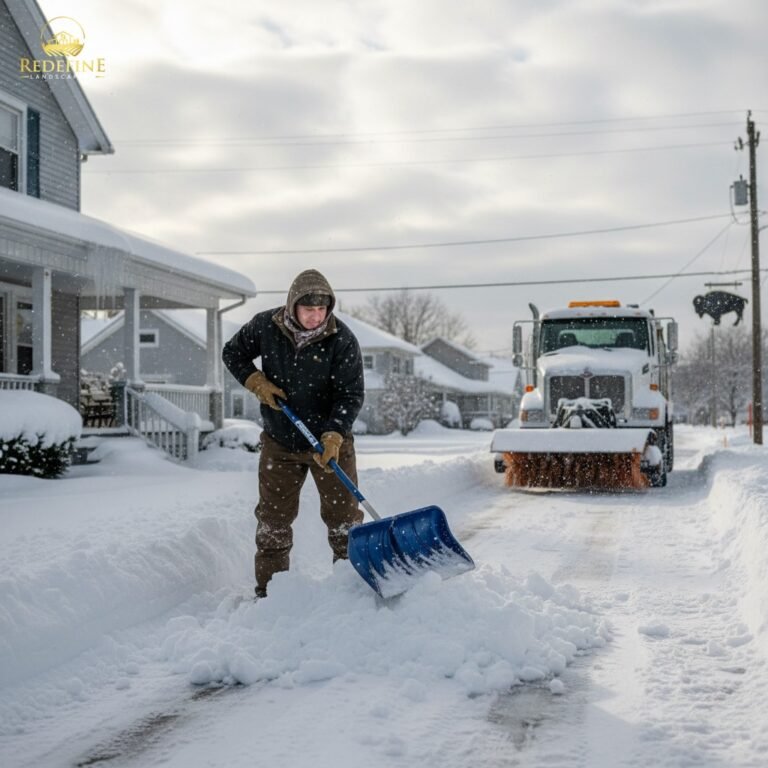
Shoveling heavy snow in cold air is one of the most strenuous things most people do all year — sustained heavy lifting while cold constricts blood vessels and raises blood pressure. That combination is exactly why emergency rooms brace for snow days, and why the warnings concentrate on people over 45, smokers, and anyone with a heart condition or a mostly sedentary year behind them.
The practical rules: warm up indoors first, work in 15–20 minute shifts with breaks, push rather than lift wherever possible, keep the loads small when you must lift, and stop at the first sign of chest tightness, unusual breathlessness or dizziness — that is not a “push through it” signal anywhere, least of all alone in a cold driveway at 6 a.m. If a doctor has ever cautioned you about exertion, the honest answer is a seasonal contract, not a better shovel.
Mistake 2: Lifting when you should push
Technique is the difference between a cleared driveway and a wrecked back. The rules that matter:
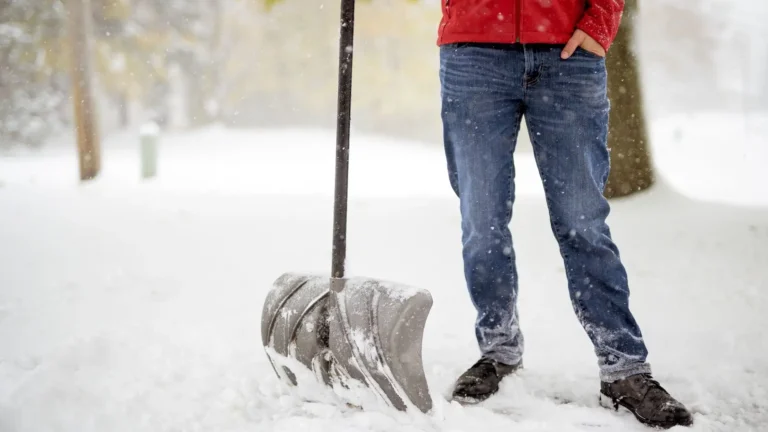
- Push, don’t lift. A pusher-style blade moved in lanes beats scooping and throwing for everything except the pile edges.
- When you must lift: small loads, bent knees, straight back — and walk the load to the pile. The twisting throw over the shoulder is the classic back injury in one motion.
- Match the shovel to the snow. A wide pusher for light powder, a smaller scoop for the wet heavy stuff — a giant blade full of slush is a lifting injury you bought on purpose.
- Clear in shifts during long storms — twice through six inches is far easier than once through a foot (more on this in Mistake 5).
Mistake 3: The snowblower shortcuts that cause ER visits
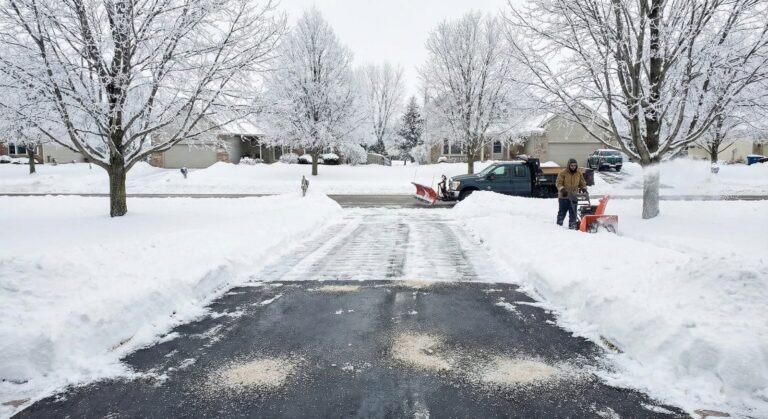
Snowblower injuries follow one script, repeated every winter: the chute clogs with wet snow, the operator reaches in to clear it, and the impeller — stalled under tension, not stopped — releases when the clog moves. Engine off, wait for all rotation to stop, then clear the chute with a stick or the clean-out tool. Never a hand, never a foot, no exceptions, even with the engine off.
The less dramatic mistakes that wreck the machine instead of the operator: running the skid shoes low on a gravel drive (the driveway throws stones at your windows all winter), forcing a single-stage machine through deep wet lake-effect loads it was never built for, and storing it all summer with fuel in the carburetor so it refuses to start the morning you need it. October is when the snowblower gets serviced — the same week the rest of the winter checklist happens.
Mistake 4: Over-salting — and salting wrong
Salt feels free compared to the damage it quietly does. The four ways DIY salting goes wrong in Buffalo:
- Salt on new concrete. The concrete industry’s own guidance is blunt: “DO NOT use deicing salts, such as calcium or sodium chloride, in the first year after placing the concrete” (NRMCA). On a driveway or walk poured this year, use clean sand for traction instead. On older concrete and pavers, plain rock salt used sparingly is the de-icer the Concrete Masonry & Hardscapes Association rates least damaging. Calcium chloride keeps working below roughly 15°F, where rock salt quits, but it is a cold-snap tool, not a gentler product — details in our guide to ice melt and salt on pavers.
- Volume as a substitute for timing. A moderate application before refreeze beats a heavy one after ice has formed. The melt-refreeze glaze on walkways — where most falls actually happen — is a timing failure, not a quantity failure.
- Salting the lawn edges. Thrown salt lands in the same 18 inches of turf and beds all winter; that is the brown driveway border you reseed every May.
- Ignoring traction alternatives. Sand and grit give grip without chemistry — the right call on surfaces near plantings, ponds and pet routes.
Mistake 5: Waiting out the storm
In most cities, waiting until the snow stops is efficient. In lake-effect country it is how you end up facing 14 inches of compacting snow in one session — the exact scenario Mistakes 1 and 2 warn about. Buffalo technique is clearing in shifts: every 4–6 inches during a long event. More trips, far less strain per trip, and the driveway never becomes the packed base layer that only a blade can move.
The second timing trap is the municipal plow berm — the compacted ridge the city plow leaves across your freshly cleared apron. Clear it promptly, before traffic and refreeze turn it to concrete; and angle your own clearing so you are not throwing snow into the street the plow will simply return to you.
Mistake 6: Piling snow in the wrong places
Every shovel-load goes somewhere, and by February those decisions add up to tons. The pile against the foundation becomes basement seepage in every thaw. The pile on the perennial bed delivers crush and salt together. The pile at the end of the driveway grows until it blocks the sight line to oncoming traffic. Pick pile zones in the fall — lawn corners with decent drainage are ideal — and if meltwater already ponds on your property, that is a drainage problem that winter will only sharpen.
Mistake 7: The roof and the ladder
Roof snow is the DIY line that should not be crossed. A roof rake worked from the ground on the first few feet above the eaves after big storms is safe and genuinely useful against ice dams. Everything past that — ladders against iced gutters, walking a snow-loaded roof — is how winter’s worst injuries happen, for a job professionals price at $200–$750+ per visit precisely because of what it involves. If the load looks serious or the dams are already forming, make the call.
When DIY stops making sense
None of this is an argument against doing your own snow. Plenty of Buffalo households run a well-serviced two-stage machine, clear in shifts, salt sensibly, and get through every winter fine — the honest math says DIY is cheaper over several seasons if you stay healthy, home and willing.
The calculus flips when any of these is true: a commute that cannot wait for a second pass; a household member who should not be doing winter exertion; a snow-belt address where “clearing in shifts” means four sessions a day; travel that leaves the driveway unattended in January; or simply the realization that 15–20 mornings a winter have a price, and it is not zero. When that day comes, choose the company carefully — and choose it in October, because the good routes are full by the first storm.
DIY snow removal: FAQ
Is it better to shovel during the storm or after?
In Buffalo, during — in shifts of every 4–6 inches. Lake-effect events drop too much for a single session, and snow left to sit compacts into a base layer that hand tools cannot move.
What is the safest way to clear a clogged snowblower?
Engine off, wait for every part to stop turning, then clear the chute with the clean-out tool or a stick — never a hand or foot, even with the engine off. A stalled impeller stores tension that releases when the clog moves.
Does salt damage concrete driveways?
Any de-icing salt can damage concrete, and new concrete most of all — the ready-mixed concrete industry says not to use salts such as calcium or sodium chloride in the first year after it is placed. On older concrete, use rock salt sparingly: it is rated the least damaging to concrete, and calcium chloride is for cold below roughly 15°F, where rock salt stops working. Sand adds traction with no chemistry at all.
Who should not be shoveling snow?
Anyone a doctor has cautioned about heavy exertion, and anyone with a heart condition — cold plus sustained lifting is a uniquely demanding combination. For those households, a seasonal contract is a health decision, not a convenience. Our residential snow removal covers the driveway, the plow ridge, walks and steps.
What does professional snow removal cost instead?
$450–$900 per season for a standard Buffalo driveway, or $35–$60 per visit — full market breakdown in our snow removal cost guide.
The Buffalo winter maintenance checklist · Snow removal cost in Buffalo, NY · How to choose a snow removal company · All winter care guides
Related Guides